
Basketball
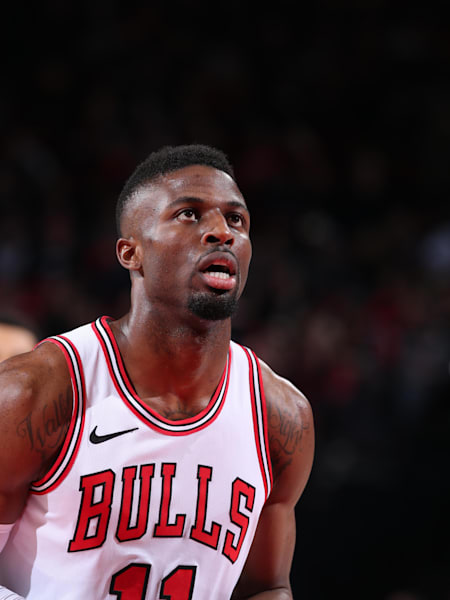
From trial to triumph: David Nwaba chronicles his path to the NBA
According to the NCAA, over 18 000 students participate in men’s basketball on the collegiate level across America. Of that group, only 1.1 percent get the chance to play professionally in the NBA.
And for David Nwaba, the odds and the numbers were stacked against him. But through hard work, determination and the support of his immigrant parents, the Nigerian/American is living his NBA dream.
David Nwaba’s journey to the NBA was unconventional.
He didn’t get his name called in the Draft. He didn’t get to walk up to the stage and smile while shaking the NBA commissioner’s hand. He didn’t get to take a picture wearing a cap and jersey with his new franchise logo.
But what he did do was become a professional basketball player for two monolith and famed teams in the league- the Los Angeles Lakers and the Chicago Bulls.
“It’s really crazy. It’s a dream come true to play for two historic teams like this. It just reminds me to continue to work as hard as ever,” says Nwaba. “It is a blessing [to have] these great opportunities. I don’t take anything for granted.”
But the road to this reality was riddled with rejection, uncertainty and self-doubt.
It starts in 2011, when a fresh-faced Nwaba was at the end of his high school career. He posted modest numbers for the University High School basketball team as he averaged a double double of 22 points and 11.5 rebounds and earned all-league honors. Under these circumstances, it seems plausible that the California native would at least garner some interest from Division I schools.
He didn’t even receive one letter. Not even an invitation for a tryout.
An offer did come through the mail but it was not what he expected. It was from Hawaii-Pacific University; a Division II school known more for its academics than its athletics. And for a teenager who had grandiose dreams of playing basketball at the most competitive level, this was not it. Despite his displeasure and fears, he accepted the deal and used it as a learning curve.
“It was a reality check,” recalls Nwaba. “I went to Division II knowing it wasn’t the highest level but it was a humbling experience being in Hawaii and I used the opportunity to build confidence.”
Hawaii was just one of three colleges he attended in his collegiate career. After being a red-shirted freshman, Nwaba moved to Santa Monica, a junior college located close to home and he got significant playing time. By the end of his sophomore year, he finally caught a break when he got an opportunity to play for Caly Poly, a Division I school in San Luis Obispo, California. It wasn’t as prestigious as Duke or UCLA, but it was something.
“I was competing against the big time competition. Throughout the year, we played against ranked teams and some of the best college players in the country”, says Nwaba.
By the end of his tenure, the 6’4 guard had developed into a formidable two way player. Under coach Joe Callero, he learnt how to be a stout defender and became accustomed to being a facilitator on the floor. These are all skills that would come in handy in the Bull’s pace and space offense.
“David is one of those guys that can get downhill on this team,” stated Fred Hoiberg, head coach of the Chicago Bulls. “He can make plays. He’s an underrated passer, very physical defender. That’s a great skill to have and a skill we need.”
His abilities and energy off the bench has made him valuable asset to the team, especially when it comes to finishing games. And the more he plays, the more Chicago wins. In contests where he has played over 20 minutes, the Bulls are 14-7. When he was out of action for most of November due to a sprained ankle injury, Chicago went on a 1-11 stretch.
The Bulls claimed him off waivers last summer from the Lakers where played 20 games. Nwaba earned his spot on the roster after being promoted from the Laker’s G-League affiliate, the Los Angeles D-Fenders.
To get to that point was an uphill battle in itself. Prior to playing in the G-League, the 25 year old struggled to find opportunities to play basketball professionally. At the end of his college career, he found himself in a familiar place: with no offers or any invitations for tryouts.
When the tough got going, Nwaba got to pushing and went to several overseas showcases in the hopes of getting a chance to play international basketball. And while he did receive some interest, none of them compensated sufficiently.
It was during this time that he leaned on the support of his family.
“Every time I was down, they had positive words to say. Even though at some points in the process I did not believe in myself, they always believed in me,” says Nwaba of his parents.
He is one of six children and was raised by Nigerian immigrants Blessing and Theodore. He grew up in a household with a strong culture of sports as his mother ran track while his father played soccer and tennis. His older sister, Barbara, is an Olympian track and field athlete who competed in the 2016 Rio Olympics and finished 12th as the top American.
Nwaba credits his family for his resilience and refers to them as a source of strength through the trying times.
“They were always very supportive of me playing basketball and they always had my back. They had a huge role in sustaining my dream of becoming an NBA player, “states Nwaba.
Eventually Nwaba got invited to try out for a D-League team, the Reno Bighorns, but had to drive eight hours to Vegas and pay $150 to attend the event. That proved to be a small price to pay as it was an opening to something greater. Immediately after being signed, he was traded to the Lakers G-League team and became a professional basketball player.
With new levels come new devils and even though he has accomplished his lifelong goal, Nwaba still has grand ambitions. His next mission: to make a name for himself in the league.
“The NBA is the best [basketball] competition in the world and you’re playing against the best every night,” states Nwaba. “It’s a long season and I am trying to play my best every night.”
How does he plan on doing this? Using the same tenacious mindset and relentless drive he needed to get himself in to the NBA.